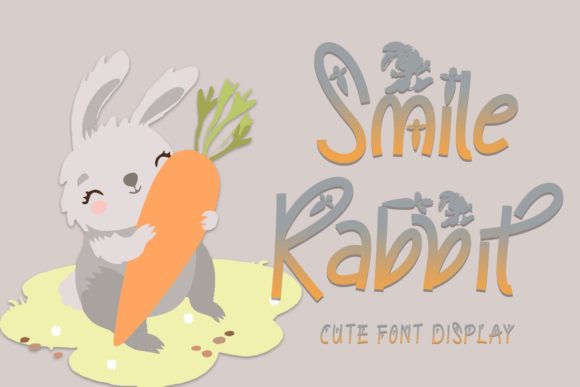
Smile Rabbit: A Display Font That Brings Joy to Web Design
I was working on a redesign for a boutique online store, and I needed a font that felt playful yet professional. Enter Smile Rabbit—a display font that immediately caught my eye with its soft curves and whimsical charm. As I began testing it in the hero section of the homepage, I realized this wasn't just any font; it had the power to elevate the entire brand experience.
A Font with Personality
Smile Rabbit is more than just a typeface—it's a mood. Its rounded edges and gentle strokes give it a friendly, approachable feel, making it perfect for creative brands that want to stand out without losing their warmth. I noticed how it added character to headlines and call-to-action buttons, making them feel more inviting rather than pushy.
Its visual style blends elements of both script and sans serif fonts, creating a unique balance between elegance and playfulness. This makes it ideal for digital projects that need a touch of personality without sacrificing readability.
Testing Smile Rabbit in Real Web Layouts
To see how Smile Rabbit would perform in real-world scenarios, I tested it across several sections of the website. In the hero section, it worked beautifully over an image banner, drawing attention without overwhelming the background. The font’s legibility even on mobile screens was impressive—something I often worry about when using decorative fonts.
On the product landing page, I used Smile Rabbit for section headings, and it helped create a clear visual hierarchy. Users could easily scan through the content, which is crucial for keeping engagement high. I also experimented with pairing it with a clean sans serif font like Montserrat for body copy, which gave the site a polished look while maintaining its playful essence.
When designing a course sales page, I placed Smile Rabbit on a dark background with light text. It still stood out well, showing that the font adapts to different color schemes and doesn’t lose its clarity. This flexibility made me consider using it for promotional banners or social media graphics as well.
Where Smile Rabbit Shines Online
Smile Rabbit excels in situations where you want to grab attention quickly. It works wonders for hero titles, section headings, and buttons. I found it especially effective for branding elements such as logos and site headers, where a strong first impression is key.
However, it's not the best choice for long paragraphs or dense text blocks. Since it's a display font, it's more suited for short phrases and decorative accents rather than body copy. I made sure to use it sparingly, reserving it for areas where impact mattered most.
For online stores, Smile Rabbit can be a great fit for product tags, promotional banners, and seasonal campaigns. It adds a personal touch that can help differentiate your brand from competitors. Just be mindful of how it interacts with other design elements, ensuring that it complements rather than clutters the layout.
Practical Tips for Using Smile Rabbit
If you're considering Smile Rabbit for your web projects, here are a few tips to keep in mind:
- Check for Webfont Availability: Make sure the font includes webfont formats like WOFF and WOFF2 for optimal performance on websites.
- Test on Multiple Devices: Always preview the font on desktop, tablet, and mobile screens to ensure it looks good across all platforms.
- Consider Accessibility: Use high-contrast color combinations to maintain readability, especially for users with visual impairments.
- Pair with Complementary Fonts: Combine Smile Rabbit with a simple sans serif or serif font for body text to maintain a balanced and professional look.
- Review Licensing: Before using Smile Rabbit on client projects or commercial websites, confirm that it has proper commercial licensing to avoid legal issues.
Overall, Smile Rabbit is a versatile and expressive display font that can bring a unique flair to your web designs. Whether you're building a portfolio site, an e-commerce platform, or a marketing campaign, it offers a fresh and engaging way to communicate your brand's personality.